

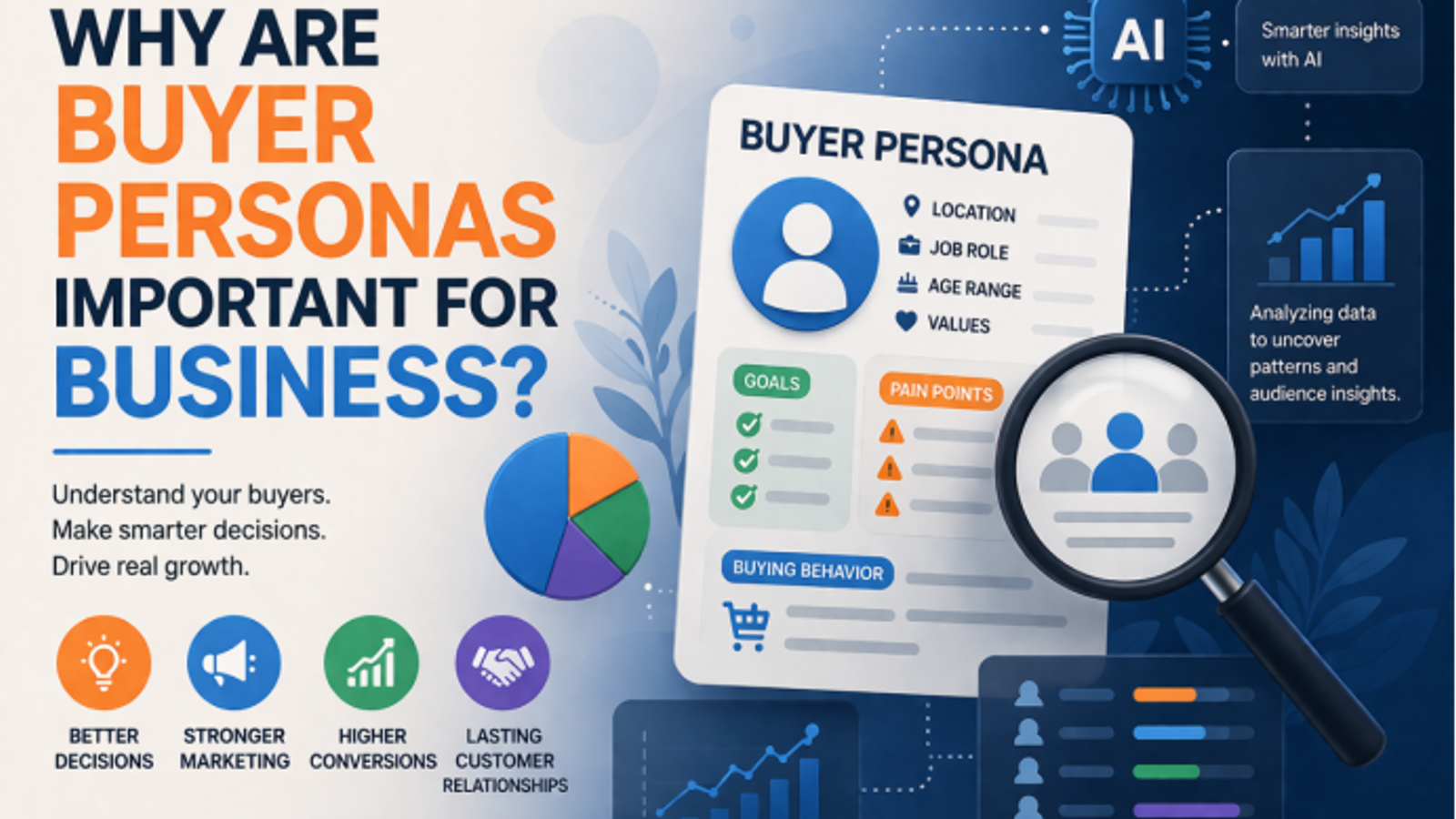
Most businesses do not struggle because they lack products, services, or marketing tools. They struggle because they do not understand their audience deeply enough. That is why buyer personas still matter.
Not as a formal document that is created once and forgotten. This is not a “marketing task” to check off. Instead, the playbook serves as a real business tool that helps teams understand who they are speaking to, what those people need, and why they make decisions.
In a market full of noise, that clarity matters.
Today’s customers are not just buying products. They are comparing options, reading reviews, watching content, asking questions, and expecting brands to understand them. Generic messaging gets ignored. Broad targeting wastes budget. And businesses that speak to everyone often connect with no one.
Buyer personas help solve that.
They give businesses a clearer picture of their ideal customer, not just age or job title, but also pain points, goals, buying behavior, and what actually influences trust.
And that changes how a business operates.
A strong buyer persona can shape better marketing, stronger content, smarter sales conversations, and even better product decisions. It helps businesses stop guessing and start making decisions based on who the customer really is.
That matters because relevance drives results.
If a business understands what its audience is trying to solve, it can create better messages. If it knows what customers hesitate over, it can address objections earlier. If it understands how different segments think, it can market more precisely instead of more broadly.
That is where buyer personas become more than a marketing concept. They become a growth advantage.
AI is making this work even more powerful.
nstead of building personas only from assumptions or limited observations, businesses can now use AI to analyze behavior at scale. AI can uncover patterns in search behavior, website activity, CRM data, content engagement, support questions, and purchase trends. It can help identify which audiences are converting, what problems come up repeatedly, and where customer interest drops off.
That means buyer personas can become more dynamic, more data-informed, and much more useful.
"AI should help the strategy, not take its place"
It can identify patterns, but it cannot fully understand human context, emotion, or motivation on its own. Businesses still need real judgment to interpret what the data means and how to respond in a way that feels relevant and human.
That balance is important. Because the real value of buyer personas is not just in knowing who the customer is. It is knowing how to serve them better.
The businesses that do this kind of work well tend to make better decisions across the board. They create more relevant offers. They attract better-fit leads. They improve conversion quality. And they build stronger customer relationships because people feel understood from the start.
Overall, buyer personas matter because business growth is not only about visibility. It is about relevance. And in an AI-driven business environment, the companies that grow strongest may not be the ones with the most data. They may be the ones who understand their audience best.